Tray Lights and Salad Nights: Testing Microgreens on a British Windowsill
By the second week of November 2026, the windowsill is often the brightest bit of the garden. The beds are soggy, the shed is cold, and the supermarket salad bag has begun to feel like a weekly tax. Microgreens are the obvious answer, but they are also the crop most likely to turn into a tray of fuzzy compost by Tuesday. So I ran a small, deliberately unglamorous trial: three shallow trays, one south-facing windowsill, no heat, no greenhouse and no grow light. The aim was a realistic six-week run into January, with fresh cuttings rather than a fantasy harvest.
The setup: three trays, one windowsill
The trial used pea shoots, radish and a quick brassica mix. Peas went into a deeper tray, roughly 6cm of compost, because they root more heavily and need something to hold onto. Radish and the brassica mix went into shallow trays at about 3cm. All trays had drainage holes and sat on saucers. That matters more than it sounds: microgreens want damp compost, not a permanently wet bottom. A cheap plastic seed tray with a clear lid is useful for germination, but the lid comes off the moment green shows.
I used a peat-free multipurpose compost, rubbed through a sieve to remove lumps, and pressed it gently rather than compacting it. The surface was watered before sowing, then left to drain. Trays were cleaned with hot soapy water first. Old trays are fine, but they need to be genuinely clean, because mould spores are patient little things.
Density: the difference between a carpet and a mudslide
This was the most useful part of the test. On each tray I sowed half at what I would call a sensible density and half much thicker. For radish, sensible meant seeds roughly 5–8mm apart, scattered thinly enough that most seeds touched compost rather than each other. The thick half got about double that. For pea shoots, sensible meant a fairly close single layer with minimal overlap, soaked overnight first. The thick half was piled on.
The thicker halves germinated fastest and looked impressive for about four days. Then they stalled. Air could not move between the stems, watering sat in the canopy, and the mould arrived in patches. The thinner halves were slower to fill the tray but gave cleaner, sturdier cuttings and less waste. Pea shoots were the most forgiving, but even they resented being sown like gravel. If you remember one thing, make it this: a dense tray is not a generous tray. It is a damp little queue for the compost bin.
Tray depth, roots and the January reality
Shallow trays are fine for radish, mustard and most brassicas because you are harvesting before the roots need much room. Peas are different. They want a little more depth, and they also benefit from being soaked for eight to twelve hours before sowing. A deep seed tray or a clean mushroom tray with holes punched in the base is plenty. Do not go deeper than about 6cm unless you enjoy lifting heavy trays.
Light is the real limiting factor from late November to January. A UK windowsill may get a few hours of weak sun on a good day, and nothing but grey on a bad one. The trays that did best were close to the glass, rotated daily so stems did not lean into a pale tangle. Leggy seedlings are usually telling you they want more light or less heat. A windowsill above a radiator is the worst of both worlds: warm enough to stretch them, dark enough to leave them weak. If you have a cooler, brighter sill, use it.
Mould, airflow and the watering mistake
Mould was the dividing line between a decent crop and a smelly disappointment. The pattern was consistent: too much water, too little air, too many seeds. Bottom watering helped once the seedlings were up, because the surface stayed drier. Misting every day did not help; it kept the canopy damp. A small desk fan on low, pointed near but not at the trays, made a noticeable difference in the stuffier room. In a normal kitchen, simply opening the lid fully after germination and leaving a gap around the trays is often enough.
If mould appears at the soil line, scrape it away, improve airflow and cut back the water. If it is threaded through the stems, bin the tray. Do not try to rinse it off and hope. Clean trays, fresh compost and sensible sowing density prevent most problems before they start.
The six-week timetable
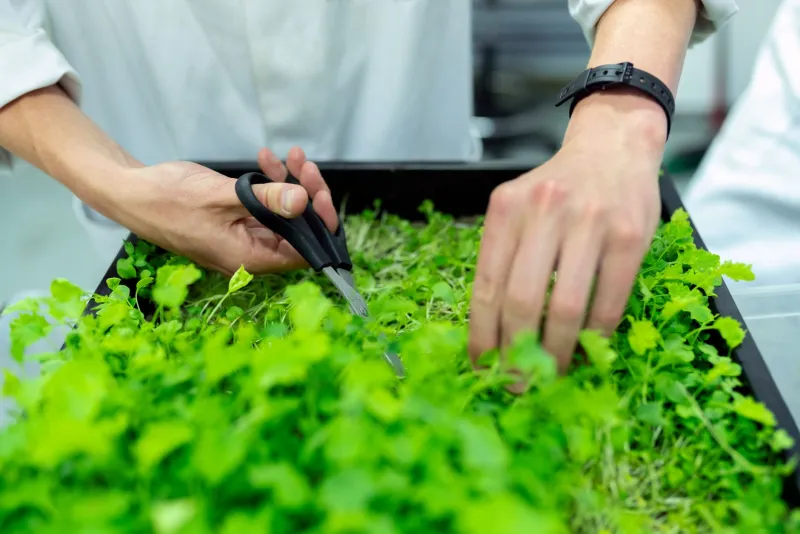
A simple succession works better than one heroic tray. Sow peas first, because they take longest, then radish about ten days later, then another small tray of each in early December. Radish is usually ready in seven to twelve days; pea shoots take roughly two to four weeks depending on light and warmth. By January you are cutting small handfuls rather than harvesting a whole salad bowl at once. That is the point. A tray on the windowsill is not a field; it is a garnish factory with modest ambitions.
Cost per portion: the honest verdict
Microgreens are not automatically cheaper than a bag of salad. A bag of supermarket mixed leaves costs somewhere around £1.50–£2, and a 30g portion of homegrown microgreens uses a small amount of seed, compost and electricity-free windowsill space. Pea shoots are the best value if you buy dried peas in bulk. Radish seed goes a long way, but a tiny packet can still cost £2–£3. Once you factor in trays, compost and the odd failed sowing, the saving is modest.
The win is freshness, variety and the fact that you can cut exactly what you need in January. A 30g cutting from a well-sown tray can work out at roughly 30–60p once the kit is reused, which beats the bag on flavour and flexibility. It does not beat it on sheer penny-pinching unless you already have seed and trays. That is still a fair trade for most small kitchens.
What I would change next time
I would sow thinner, use shallower trays for everything except peas, and start the first tray in the middle of November rather than waiting for a neat six-week countdown. I would keep the clear lid only until germination, rotate the trays every morning, and resist the urge to water just because the surface looks dry. Most of all, I would sow little and often. A January windowsill crop is not about beating the supermarket at its own game. It is about having something green and alive to cut when the garden is doing its best impression of a wet brown rug.