Rain, Ice and the Container Shelf: Choosing Pots That Last the Winter
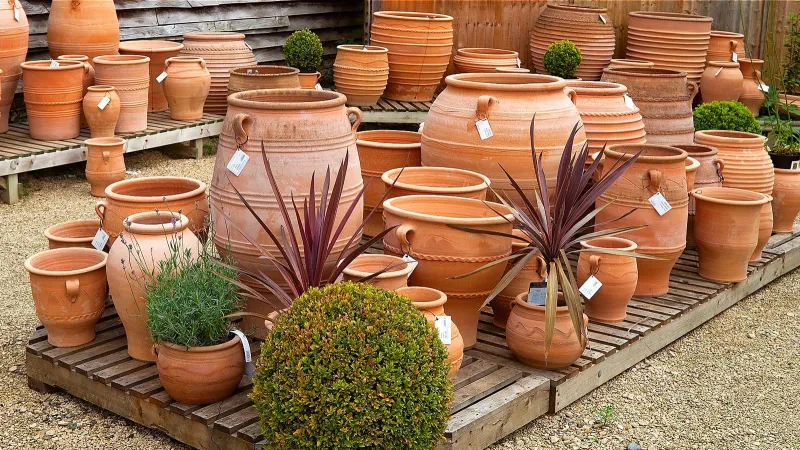
Photo: terracotta plastic fabric plant pots wet winter UK garden, via www.housedigest.com
Terracotta, plastic and fabric pots all look fine in October. By February, the differences are written in cracks, splits and sodden compost. A British winter is less about one dramatic freeze and more about weeks of rain, followed by a cold snap, followed by a mild, wet week. That cycle is what breaks containers, and the material you choose is only half the story. The other half is where the pot sits, what is in it and whether you can move it.
Why February is the real test
Frost damages pots in two ways. Water gets into the pores of the material, freezes, expands and pushes the surface apart. And the compost itself can freeze solid, putting pressure on the sides. Add wind and the fact that many pots are sitting in saucers full of water, and you have a recipe for cracked rims, spalled glaze and roots that have been waterlogged for months. A pot that survives one cold night may still fail after three wet weeks.
Terracotta: beautiful, heavy and honest about risk
Standard terracotta is porous. That is why it breathes well in summer and why it can flake and crack in winter. Frost-proof terracotta costs more and is fired differently, but even then the label usually means frost-resistant, not frost-proof. A cheap terracotta pot might last three or four seasons if it is sheltered; a good frost-proof one can last a decade or more. Cost per useful year is the number that matters, not the price on the shelf.
If you love terracotta, use it for hardy plants and move it close to a wall for winter. Empty pots are best stored dry, stacked on their sides so water cannot collect. Do not leave them full of soggy compost in a saucer. If a pot does crack, it can still serve as a drainage layer in a border or as a home for a less demanding plant, provided the crack does not split the whole side.
Plastic: the quiet workhorse
Plastic pots are light, cheap and easy to move, which makes them the sensible choice for anyone with a small garden or a windy balcony. The weak point is UV. Cheap black pots go brittle after a few summers, and a brittle pot is more likely to split when it is lifted while full of wet compost. UV-stabilised plastic lasts longer, but it still ages.
A basic plastic pot might cost £3-£10 and give three to six useful years. That is often the lowest cost per year of any material, especially if you can store it empty over winter. Check for cracks before filling, raise pots on feet and avoid dragging them across paving. A plastic pot that has gone chalky and pale is telling you it is near the end of its life.
Fabric pots: great in summer, soggy in winter
Fabric pots are brilliant for air-pruning roots and for plants that dislike sitting wet in summer. In winter, they are a different proposition. The fabric holds water, freezes stiff and can grow algae on the outside. Cheap fabric pots may only give one or two seasons; better ones last three or four if they are emptied and stored dry.
If you want to keep using fabric pots, treat them as seasonal kit. Empty them in autumn, brush them clean, dry them thoroughly and store them somewhere airy. Do not leave them standing on wet ground full of compost. If you have no choice, raise them on a pallet or bricks and accept that the fabric may degrade faster.
The cost-per-useful-year maths
The cheapest pot is not the one with the lowest price tag. It is the one that does the job for the longest time without needing to be replaced. Divide the purchase price by the number of seasons you realistically expect to get. A £6 plastic pot that lasts five years costs £1.20 a year. A £15 terracotta pot that cracks in two winters costs £7.50 a year. A £20 frost-proof terracotta pot that lasts ten years costs £2 a year, but only if you have somewhere to store it and can lift it.
Fabric is the tricky one. A £10 fabric pot that lasts three seasons is £3.33 a year, which is fine if it suits your watering style. If it falls apart after one wet winter, it is poor value. Buy for the conditions you have, not the conditions on the label.
Storage when you have no shed
You do not need a shed or greenhouse to overwinter pots well. You need somewhere dry, airy and out of the worst wind. A stack of empty pots under a bench, behind a bin store or in the corner of a balcony can work if they are tilted to drain. A lidded plastic box is useful for small pots, but leave the lid slightly open so condensation can escape.
For planted pots, cluster them together against a house wall. The wall gives off a little warmth and blocks wind. Stand pots on bricks or pot feet so water drains freely, and remove saucers before winter. If you have a cold frame, use it for the tenderest pots; if you do not, a doubled layer of fleece over a cluster is better than nothing.
A simple winter container plan
In late autumn, empty annual pots, clean them and store them dry. Check drainage holes on every pot that stays outside. Raise pots off the ground, move them out of saucers and group them together. Stop feeding, reduce watering and remove any dead foliage that could hold damp. In spring, inspect each pot before refilling it: a hairline crack now is a split later.
Pots are not forever, and that is fine. The aim is to choose materials that give you a fair number of useful years, then look after them well enough that February does not decide the matter for you.